
Naturism in Croatia: laws and customs
Updated October 25, 2026
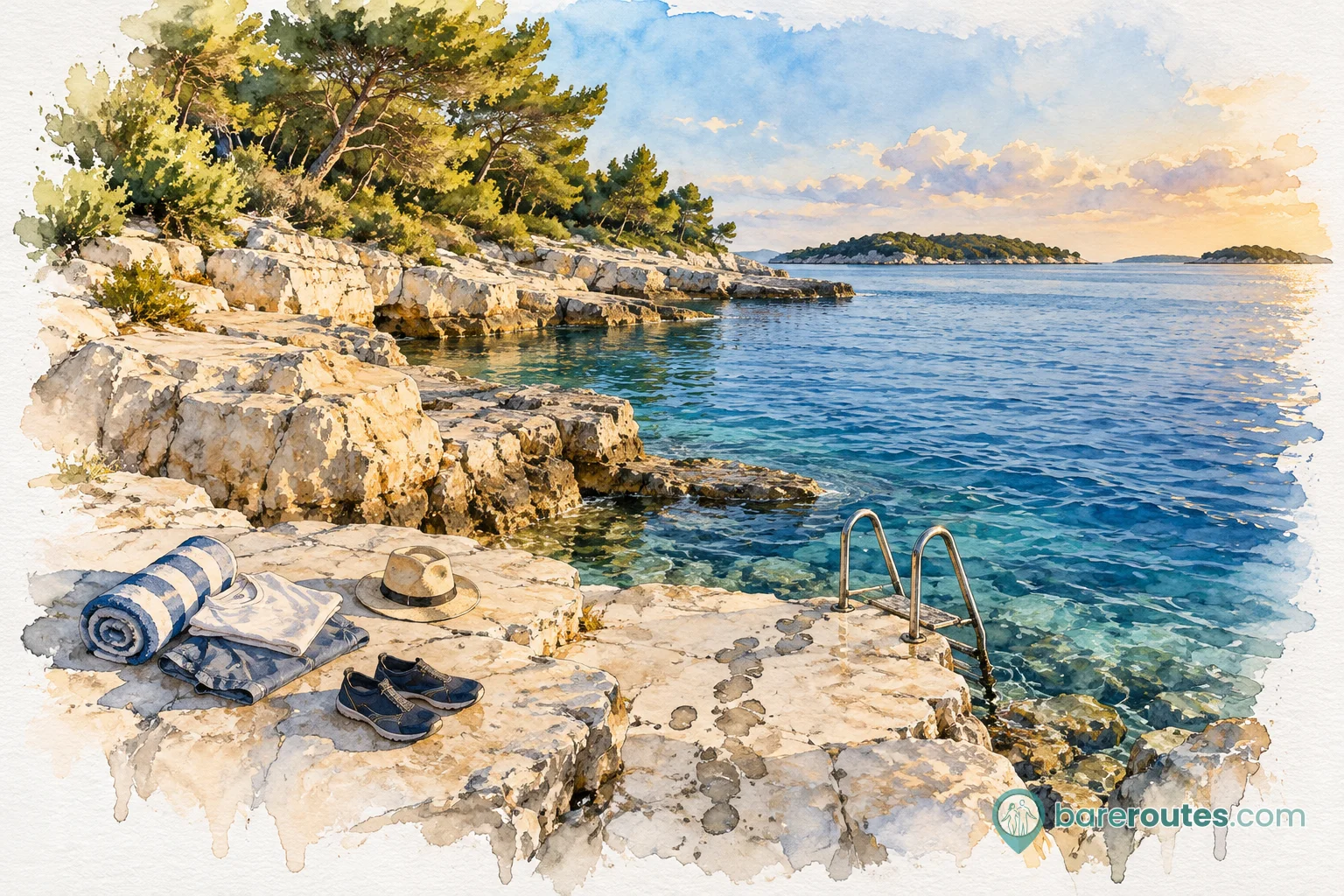
In Croatia naturism is a historic tradition, with many FKK campsites and beaches in Istria and Kvarner. Outside the designated places you risk a fine of €200 to €1,000.
At a glance
- Official naturist beaches and areasAllowed on beaches designated by the municipality
- Naturist staysAllowed; many FKK campsites, especially in Istria and Kvarner
- Unofficial naturist beachesMany traditional ones, but some disputed or removed
- Naked in nature, away from peopleNot verified
- Regular beach, townFine of €200 to €1,000
- Local bansSwimwear or bare chests banned in many town centres: €132–600
- ToplessNo law; lying down yes, walking among families is frowned upon
- Sauna without swimwearNot verified
- LGBTQ+ travellersNo legal risk
Naturism is accepted at campsites and on traditional FKK beaches; outside them, modesty prevails.
What the law says
In Croatia there is no national law on nudist beaches. Outside the designated places, article 14 of the law on offences against public order and peace applies: it punishes anyone who "in a public place offends or shows contempt for the moral feelings of citizens" (Narodne novine 5/1990). Since 2023 the fine has been €200 to €1,000 (Narodne novine 47/2023); before that it was €20 to €100, and some newspapers still report the old figures. The law also allows municipalities to add other public order offences.
It applies on boats too: according to the Ministry of the Interior, nudity on boats anchored near public beaches is not tolerated if it offends moral feelings, and the police step in under the same article 14 (Regionalni.hr, 2024).
Article 14 fines are few in any case, even counting all grounds (the most frequent cases involve people urinating in the street): in the first half of 2024 there were 43 in Split-Dalmatia County, 3 in Istria, 18 in Zadar County and 29 in Primorje-Gorski Kotar (same source).
Where you can be naked
- Official FKK beaches: beaches are public property managed by local authorities, and it is the municipality that decides their status, nudist status included; in tourist complexes the concession holders do it. Marking a beach as nudist on your own is not allowed (Dubrovački dnevnik, 2025). In Pula, for example, the 2026 plan designates as nudist beaches the stretch between Ambrela and Saccorgiana, 120 m at Valovine and 170 m of rocky shore at Štinjan (Istarski.hr, 2026); the final vote has not been verified.
- Naturist campsites: according to the national tourist board, Croatia has the third-largest number of naturist campsites in Europe, about 30,000 pitches, mainly in Istria and Kvarner. Koversada, in Istria, is described as the first naturist campsite in Europe, and the tradition began on Rab in the 1930s, where in 1936 King Edward VIII also bathed naked (Croatia.hr).
- Naturist stays: you can find them in the list of naturist places in Croatia.
Tolerated beaches and bans
Many beaches are nudist by tradition. In Dubrovnik, for example, the press mentions Cava (Babin Kuk), the south of Lokrum, Beterina, the islet of Supetar near Cavtat, and Plat and Šunj on Lopud (Dubrovački dnevnik, 2025).
Outside those beaches, several municipal regulations ban going without swimwear. In Fažana, in Istria, moving around the beaches without swimwear is banned, "unless it is a beach designated as nudist" (Službene novine Istarske županije 28/2023). A similar rule was in Pula's 2023 draft regulation (Grad Pula).
When a traditional beach is to be made official, residents' protests sometimes win:
- in Pula, in 2026, the "stara klaonica", used by nudists for years, was removed from the plan after 15 objections, because of its closeness to homes, families with children and the footpath used by passers-by (Istarski.hr);
- on Lokrum, off Dubrovnik, the nudist beach signs were taken down in August 2026. After residents reacted, the reserve put up a new sign: naturist bathing is allowed, but the beach remains open to everyone, with or without swimwear (Morski.hr, 2026).
Topless, towns and saunas
- Topless: no national rule. Pula proposed a ban in 2023, then dropped it after the public consultation. A Slobodna Dalmacija headline sums up the custom: "Topless: lying down is fine, walking around is not". In Omiš, in 2025, a tourist walking topless on a beach full of children led parents to protest (Slobodna Dalmacija).
- In town: many towns ban walking around in swimwear or without a shirt in the old town. Fines: Zadar €132, Split and Dubrovnik €150, Hvar up to €600 (Net.hr, 2026).
- Sauna: our research found no sources.
The local mood
In Croatia nudity is accepted at campsites and on traditional FKK beaches, especially in Istria and the Kvarner: a long-standing tourist industry, used mostly by foreigners. Outside those places, modesty prevails in a very Catholic country (79% at the 2021 census, DZS): going topless among families makes the news, and when a municipality wants to make a beach near homes official, protests often win.
Among Croatians, naturism seems to be in decline: some say that nudist beaches are mostly full of older people and that campsites are getting fewer (r/askcroatia, 2024).
Naturist associations
- Društvo naturista Hrvatske: the national federation recognised by INF-FNI, the international federation.
Whether places require a membership card is not clear: it is best to ask beforehand.
LGBTQ+ travellers
No legal risk: same-sex relations have been legal since 1977, since 2013 there have been hate crime laws, and since 2022 joint adoption for same-sex couples (ILGA World).
This guide sums up laws and customs as we checked them on the date shown, citing the sources. It is not legal advice: rules can change.