
Naturism in New Zealand: laws and customs
Updated October 25, 2026
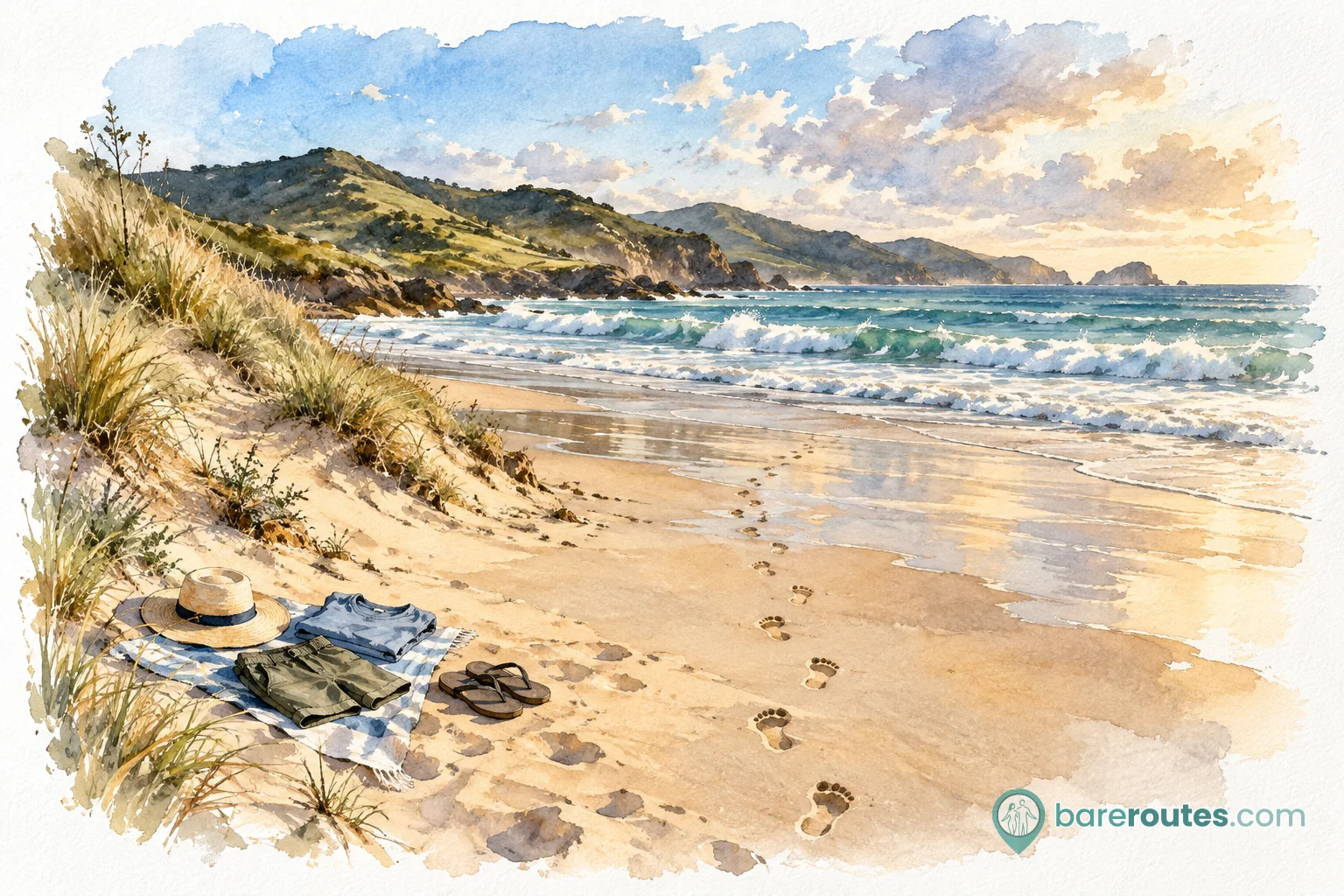
In New Zealand being naked in public is not a crime in itself, and judges often acquit naturists. There are no official beaches: nudity is accepted on a few traditional beaches.
At a glance
- Official naturist beaches and areasNone exist: the law doesn't provide for them, they aren't needed
- Naturist staysAllowed
- Unofficial naturist beachesUsually no problem; judges acquit naturists
- Naked in nature, away from peopleUsually legal: naked runners on trails acquitted (2012, 2025)
- Regular beach, townNot a crime in itself; fine of up to NZ$1,000 if judged offensive
- Local bansSome bylaws ban "offensive" nudity: up to NZ$20,000
- ToplessNo ban; sometimes criticised
- Sauna without swimwearNot verified
- LGBTQ+ travellersNo legal risk
One of the most permissive laws in the world, but a reserved mindset: nudity is accepted on a few traditional beaches and draws complaints where there are families.
What the law says
In New Zealand no law bans being naked in public. The Summary Offences Act 1981 punishes anyone who, in or within view of a public place, exposes their genitals "intentionally and obscenely": up to 3 months in prison or a fine of up to NZ$2,000 (s.27). Anyone who behaves "in an offensive or disorderly manner" risks a fine of up to NZ$1,000 (s.4). The Crimes Act punishes indecent acts in a public place with up to 2 years (s.125). For exposure and for indecent acts, it is a defence to show that you had reasonable grounds to believe you would not be seen.
For the courts, nudity alone is usually not enough. In 1991 the Auckland High Court overturned the conviction of a naturist who had been naked on a beach in front of a school group on an outing: in a place where nude sunbathing "was not uncommon", his behaviour was inappropriate and in poor taste, but not such as to provoke anger or disgust in a reasonable person (text of the ruling).
Since then the courts have acquitted a cyclist who trained naked on the road (2010), a man who ran naked on a forest trail near Tauranga (2012), a naturist who walked on the secluded beach in front of his home at Kaka Point (2022) and a person who ran naked on a trail in Invercargill (2025). For the judge in 2025, running naked while practising naturism "of its own, may not amount to a criminal offence" (Police v Dunn, 2025). Things went differently in 2013: the conviction was upheld for the same man from 2012, who gardened naked in full view of his neighbours, in an area with two schools and young children in the house next door.
Judges weigh the naturist's freedom of expression against other people's right to peace and quiet, and look at present-day attitudes, not just at the reaction of whoever complains. A law professor summed it up in 2023: it is legal to be naked in a public place unless it becomes disorderly or offensive behaviour, and context matters (Otago Daily Times).
Where you can be naked
- Traditional beaches: there are no official nude beaches. After the 1981 law, naturists stopped asking for them because they were "no longer necessary" (Free Beaches NZ). The press mentions Uretiti Beach (Northland), Ladies Bay (Auckland), Ocean Beach (Hawke's Bay), Peka Peka Beach (Kapiti Coast) and South New Brighton Beach (Christchurch) (Stuff, 2018).
- Nature: according to Free Beaches NZ, naturists usually go to beaches, riversides and naturist parks.
- Naturist stays: you'll find them in the list of naturist stays in New Zealand.
Tolerated beaches and bans
On the traditional beaches nothing usually happens. In 2018 a police spokesperson said that "there was no law against being naked in public" and that calls are assessed case by case (Stuff, 2018). When the police step in, it's for harassment: in 2005 at New Brighton, over a naked man who was bothering women (NZ Police).
Some council bylaws, however, set limits. On the Kapiti Coast it is prohibited to remain on the beach, in view of others, "in such a state of undress as to cause offence"; for breaching the bylaw the maximum fine, on conviction, is NZ$20,000. The same bylaw allows the council to declare "clothing optional" areas after public consultation (Beach Bylaw 2021). In New Plymouth the 2025 bylaw on public places contains no rules on nudity (NPDC). Other councils' bylaws have not been checked.
Topless, towns and saunas
- Topless: no rule bans it; the law only refers to genitals. As early as 1991 the judge noted that in Takapuna it was "a common sight". Not everyone accepts it, though: one woman tells of topless friends who were told by other women that their nipples were "offensive" (Reddit, 2023).
- In town: being naked is not a crime in itself, but the ban on offensive behaviour applies and context matters: near schools and children, a naturist was convicted (2013).
- Sauna: no information found.
The local mood
New Zealand has some of the most permissive laws in the world and is highly secular: more than half the population says it has no religion (Stats NZ, 2023). When it comes to nudity, though, the mindset is reserved, closer to the English-speaking world than to northern Europe: many see naturism as harmless but odd, and those who practise it say they have never been moved on from a beach (Reddit, 2025).
Nudity is accepted on the few traditional beaches; on family beaches and in small towns it draws complaints. The police step in over harassment and sexual acts, not over nudity.
Naturist associations
- New Zealand Naturist Federation: the national federation, a member of the INF-FNI, the international federation.
- Free Beaches NZ: since 1975 it has worked on nudity on public beaches.
Whether venues ask for a membership card has not been verified: it's best to ask beforehand.
LGBTQ+ travellers
No legal risk: same-sex relations have been legal since 1986 (ILGA) and marriage is "the union of 2 people, regardless of their sex, sexual orientation, or gender identity" (Marriage Act 1955).
This guide sums up laws and customs as we checked them on the date shown, citing the sources. It is not legal advice: rules can change.