
Naturism in the United Kingdom: laws and customs
Updated October 24, 2026
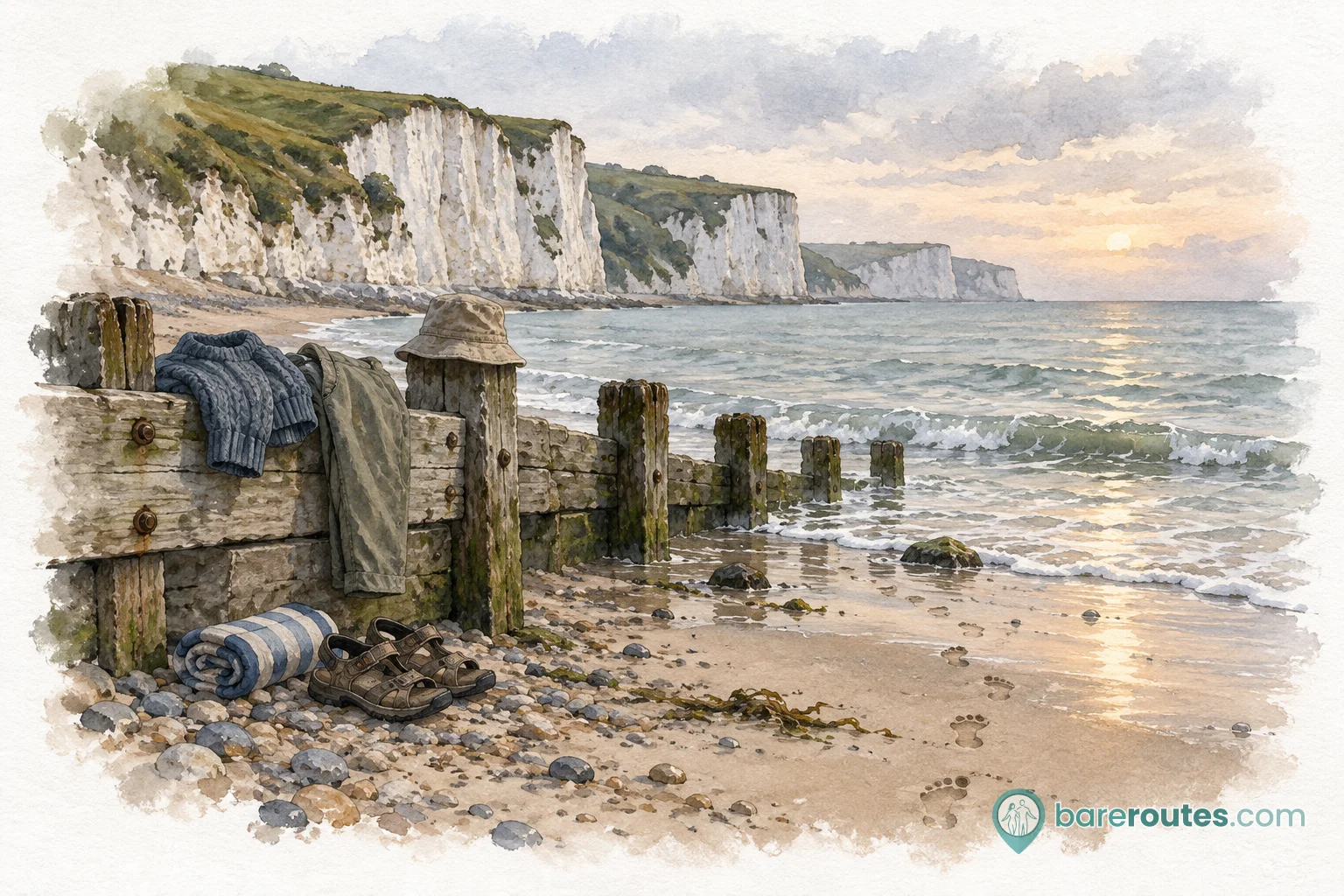
In England and Wales simply being naked in public is not a crime and the police should not intervene, but the British are reserved. In Scotland the courts are stricter.
At a glance
- Official naturist beaches and areasNone exist: the law does not provide for them, they are not needed
- Naturist staysAllowed
- Unofficial naturist beachesUsually no problem in England and Wales; Scotland stricter
- Naked in nature, away from peopleUsually legal; £800 fine for a naked walk (2023, upheld in 2026)
- Regular beach, townFine if someone is alarmed; in Scotland risk of arrest
- Local bansSigns against it on some beaches; no fines found
- ToplessNo rule; acceptable to 52% of women
- Sauna without swimwearBritons divided: 48% in favour, 47% against
- LGBTQ+ travellersNo legal risk
The most liberal law among the large countries, but a reserved people: nudity happens on customary beaches and in clubs; elsewhere the risk is that someone calls the police.
What the law says
England, Wales and Scotland have different laws. Northern Ireland has its own rules, not covered here.
England and Wales. The Sexual Offences Act 2003 only punishes exposing your genitals if there is a specific intent: to cause someone alarm, distress or humiliation, or for sexual gratification. The penalty is up to 2 years (s.66). According to police guidance, this law was deliberately written so as not to target naturists: people who are naked without a sexual context and without intent to cause distress should not be stopped, "it will not be appropriate to take any police action" (College of Policing). The same guidance warns, however, that an arrest, even without a trial, stays on record and can show up in enhanced background checks (DBS).
There is still the Public Order Act 1986: "disorderly" behaviour within sight of a person likely to be caused harassment, alarm or distress is an offence. The penalty is a fine only (s.5). According to the prosecution guidance, as summarised by the British federation, usually no action is taken "unless members of the public were actually caused harassment, alarm or distress" (British Naturism).
The risk is not zero, though. In 2023 Neil Cox was arrested while walking naked at 6:30 am on a footpath near Macclesfield, with the police guidance in his bag; two women had said they were "confused and scared". He was given an £800 fine, and in September 2026 the High Court upheld it: walking naked on a quiet footpath, where someone passing alone cannot avoid you, can be judged "disorderly" (BBC, 2026).
Scotland. Here the courts are stricter. The offence used is breach of the peace, conduct likely to alarm ordinary people: in summary proceedings up to £5,000 or 1 year. Stephen Gough, the "naked rambler", was arrested and convicted several times for being naked in public, and spent years in prison, partly for contempt of court; in 2014 the European Court of Human Rights ruled that his rights had not been violated (ECHR, Gough v. the United Kingdom). Threatening behaviour is also punished, up to 5 years (s.38), as is exposing your genitals "in a sexual manner" (s.8).
Where you can be naked
- Beaches: there are no naturist beaches by law, because nobody has the power to designate them (College of Policing). "Naturist" beaches are places of established use, with no legal status.
- Nature and garden: under police guidance, sunbathing, walking, cycling, swimming or gardening naked are "passive" behaviours. In your own garden and, in England and Wales, in public too, they are lawful activities and the police should not intervene. But the Cox case shows that a court can decide otherwise.
- Naturist stays: you can find them in the list of naturist places in the United Kingdom.
Tolerated beaches and bans
Local councils have beach bylaws, and every now and then signs against nudity appear:
- at Corton Beach (Suffolk), naturist since the 1970s and no longer "designated" since 2009, the district council made clear in 2010 that nudity "is not an illegal activity" and is not banned by the bylaws. In 2025 the parish council put up a "not a naturist beach" sign against lewd behaviour, which the federation challenged (Metro, 2025);
- at Cefn Sidan (Wales) in 2012 the council put up "nudism is not permitted" signs after some complaints, but made clear: "If genuine naturists turn up and aren't causing distress, life goes on" (BBC, 2012).
With phones everywhere, the most likely nuisance is a video or a call to the police. In Saltburn, in June 2026, two naked people on the beach were filmed and the video went viral: the police attended but took no further action (The Northern Echo).
Topless, towns and saunas
- Topless: no specific rule. 71% of men and 52% of women find it acceptable on the beach (YouGov, 2025).
- In town: being naked is not an offence in itself in England and Wales, but only 12% of Britons find nudity on any ordinary beach acceptable. If someone is alarmed, the Public Order Act fine can apply; in Scotland, breach of the peace.
- Sauna: Britons are divided, 48% in favour of nudity and 47% against. We have no information on sauna rules.
The local mood
Britons are tolerant in theory and rarely practise. Almost all find nudity acceptable at a naturist camp or on a nudist beach, but only 4% are regularly naked outdoors (YouGov, 2025). In practice, people are naked on beaches of established use and in clubs.
Outside them, the risk is not so much a conviction as someone who feels uncomfortable calling the police. People who walk naked on quiet footpaths, for example in the New Forest, say they have had no trouble; but many people, police officers included, do not know that nudity is legal, so the risk is more hassle than legal problems (Reddit, 2026).
Naturist associations
- British Naturism: the national federation, a member of INF-FNI, the international federation. It runs campaigns and publishes pocket legal guides.
Whether places require a membership card has not been verified: it is best to ask beforehand.
LGBTQ+ travellers
No legal risk: same-sex relations were decriminalised between 1967 and 2004 in the different nations of the United Kingdom (ILGA). Same-sex marriage has existed in England and Wales since 2013 (Marriage (Same Sex Couples) Act 2013) and in Scotland since 2014 (Marriage and Civil Partnership (Scotland) Act 2014).
This guide sums up laws and customs as we checked them on the date shown, citing the sources. It is not legal advice: rules can change.