
Naturism in Argentina: laws and customs
Updated October 24, 2026
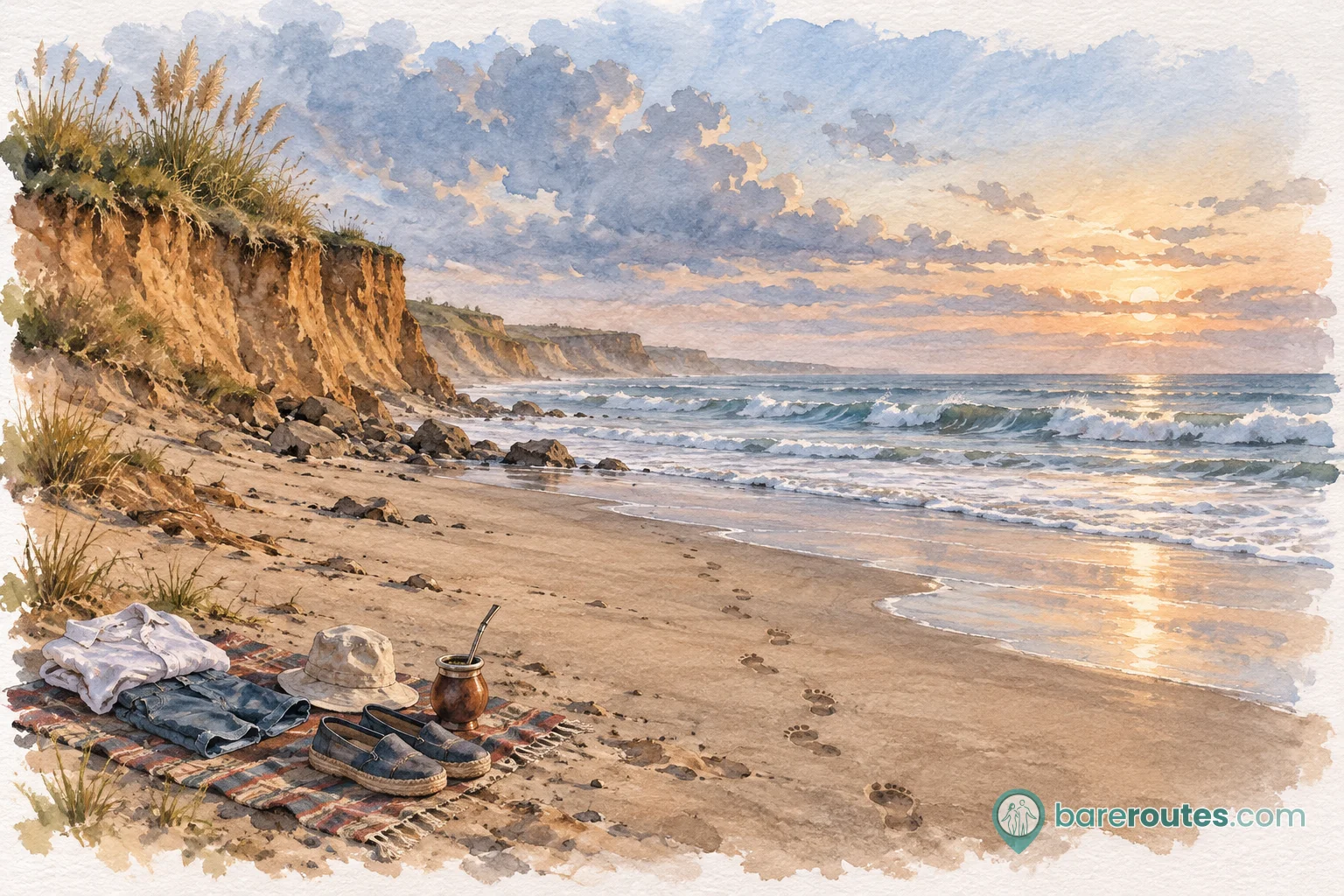
In Argentina naturism lives on a single official beach, Playa Escondida near Mar del Plata, and in private clubs. Elsewhere obscene exhibitions are fined, and even topless is not usual.
At a glance
- Official naturist beaches and areasOnly one, Playa Escondida (Mar del Plata): allowed
- Naturist staysFenced private clubs: allowed
- Unofficial naturist beachesNot verified
- Naked in nature, away from peopleNot verified
- Regular beach, townFine for “obscene exhibitions” seen by others
- Local bansBuenos Aires Province: fine for “obscene” acts that offend decency
- ToplessNot usual; in 2017 police intervened, the judge dismissed the case
- Sauna without swimwearNot verified
- LGBTQ+ travellersNo legal risk
A country where people show a lot of skin on the beach, but topless is not usual: naturism stays on one beach and in the clubs.
What the law says
Article 129 of the Criminal Code fines anyone who performs "exhibiciones obscenas" that others can see without wanting to. The text sets the fine at 1,000 to 15,000 pesos: this is the 1999 amount, and we have not verified whether it has been updated. If minors under 18 are involved, the penalty becomes prison from 6 months to 4 years (Infoleg, Código Penal).
In Buenos Aires Province there is also the Code of Misdemeanours: article 70 fines anyone who "con acto, palabra, dibujo o inscripción torpe u obscena" offends public decency. The fine ranges from 15 to 40% of a police officer's monthly salary, and it doubles at entertainment venues or if it concerns, among others, women or children (Normas GBA).
Criminal law speaks of exhibitions seen "involuntarily" by others: fenced private clubs fall outside it.
Where you can be naked
- Playa Escondida, at km 34 of Ruta 11, between Mar del Plata and Miramar: according to MDZ Online it is "la única playa nudista habilitada del país", open since 2001 (MDZ Online). It was created by a 2002 ordinance of the municipality of General Pueyrredon, which hands its management to the Asociación Naturista del Sur: the association must mark it with signs and keep watch over it (Ordenanza 15026). According to MDZ, access is free and nudity is not compulsory, but clothed groups are asked to keep their distance and be respectful. Sexual behaviour leads to expulsion, and there are security staff. Taking photos where other people are present is forbidden, and animals are not allowed. It is mostly visited by couples.
- Private clubs: the places in our list are private clubs in the Moreno area, in Buenos Aires Province. You can find them in the list of naturist places in Argentina.
Topless, towns and saunas
On Argentine beaches, El País wrote in 2017, "pese a que los bañadores son minúsculos, no existe el topless" (El País).
That same year, in Necochea, a beachgoer called the police: 20 officers and six patrol cars arrived and ordered three topless women to cover up, citing article 70 of the Code of Misdemeanours. The women left the beach. The judge later dismissed the case, writing that "el hecho que una mujer descubra sus pechos no representa un acto objetivamente lesivo para terceros", and called for the code to be changed. Protests followed, the "tetazo", at the Obelisco and in Necochea (Página/12). We have not verified whether the code was later changed.
The local mood
Argentina has a Mediterranean, Catholic culture: people show a lot of skin on the beach, but topless is not usual and can still bring the police, even though judges tend not to punish it. We have not found any surveys on nudity.
Naturism lives on one official beach and in private clubs, and also looks for space in neighbouring countries, such as Uruguay. It does seem to be growing, though: in summer 2024, while the beach resorts along the coast were losing visitors, Playa Escondida doubled its numbers (El Observador, 2024).
Naturist associations
Argentina has no federation in INF-FNI, the international federation (INF-FNI). There is the Asociación Naturista del Sur, which runs Playa Escondida.
LGBTQ+ travellers
No legal risk: same-sex relations have been legal since 1903, and same-sex couples have been able to adopt since 2010 (ILGA).
This guide sums up laws and customs as we checked them on the date shown, citing the sources. It is not legal advice: rules can change.