
What Is Naturism? Who Really Practices It, and How Naturist Resorts Work
July 22, 2026
Also available in: Deutsch · español · français · italiano · Nederlands
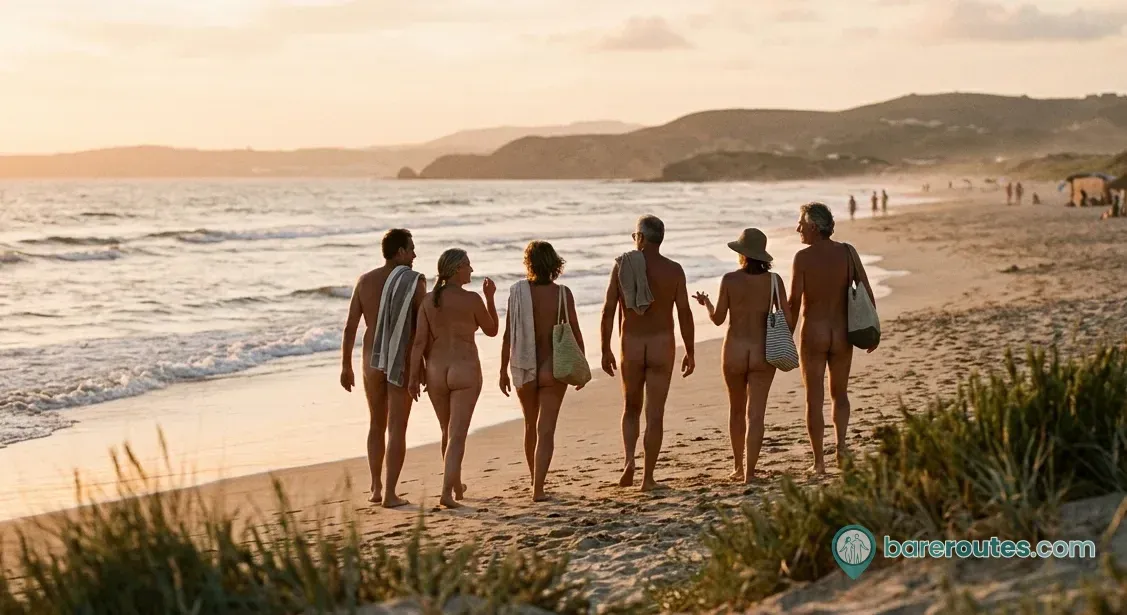
What naturism really is and who actually visits naturist resorts and campsites: rules, benefits, etiquette and what to expect your first time.
Search for "what is naturism" and you'll find the same textbook answer almost everywhere: a philosophy of life built on respect for the body, for others and for nature. All true. But anyone who walks through the gates of a naturist resort, a nudist campsite or an FKK centre quickly discovers something the textbooks rarely mention: the people inside are not all "naturists" in the pure sense of the word. Far from it. And understanding that does much more to put you at ease than any theoretical definition ever could.
The "textbook" definition of naturism
Naturism began as a philosophy of living as naturally as possible: time outdoors, care for the body, respect for the environment and for other people. Shared, non-sexual nudity is its most visible expression, but in the original idea it belongs to something broader — freedom from appearance-based judgement and acceptance of oneself.
Naturism vs nudism: what's the difference?
Historically, naturism is distinguished from "nudism", an older term that simply describes the practice of not wearing clothes, often occasionally and with no ideology behind it. In practice, today, the distinction is little more than a theoretical leftover: both approaches coexist in the same resorts, under the same rules, without any friction at all.
Who you'll actually meet at a naturist resort
This is probably the most useful thing to understand if you're considering your first visit, because the variety is real — and it's also why these places work so well:
- The lifelong naturist. Someone who has lived naturism as a life choice for years, often a member of a club or federation, and for whom nudity genuinely carries a wider meaning tied to values, community and lifestyle.
- People who simply enjoy being unclothed. No particular philosophy — just the physical pleasure of feeling free of clothes, tanning without swimsuit lines, being comfortable. Probably the most common profile of all.
- Couples and families looking for a different kind of holiday. People who choose these resorts for the relaxed, informal, non-judgemental atmosphere rather than out of any ideological commitment.
- First-time curious visitors. People who have heard about it from friends or online and want to try it without great expectations — often with a bit of initial nervousness, which is entirely normal.
- People rebuilding confidence in their own body. After a difficult period with body image, many find these environments far less judgemental than a "regular" beach.
- People who just want peace and quiet. Even guests who don't identify with "pure" naturism at all, but appreciate that these places generally offer more privacy, fewer raised phone cameras and a calmer atmosphere than crowded holiday destinations.
Different profiles, different motivations, very different degrees of "ideological conviction". What holds them together without friction is not a shared philosophy but a shared set of rules: the same standards of respect and discretion apply to everyone, whatever their reason for being there.
More than a century of history
The modern naturist movement was born in Germany between the late nineteenth and early twentieth centuries — that's where the abbreviation FKK comes from, Freikörperkultur, "free body culture" — as a reaction to the social rigidity of the era and as a practice of natural health built around air, sunlight and water. From there it spread to France, the United Kingdom and the rest of Europe, then to North America, Australia and beyond. The 1960s and 70s gave it a fresh cultural push through the hippie movement. Today it is a global phenomenon, with active federations in dozens of countries and an ever-growing offer of dedicated beaches, campsites and resorts — visited, as we've seen, by a far more varied public than the word "naturism" might suggest.
The benefits — without overselling them
Psychological research — including studies by the British psychologist Keon West (Goldsmiths, University of London, published in the Journal of Happiness Studies) — has found that taking part in naturist activities is associated with improved body image, higher self-esteem and greater overall life satisfaction. Seeing real bodies — unretouched, un-magazine-like — helps many people relax their relationship with their own appearance.
That said, you don't need to believe in any philosophy to enjoy the more concrete advantages, which apply to everyone regardless of how "convinced" a naturist they are:
- Physical comfort, especially in hot weather, and no tan lines.
- Less appearance pressure: in most of these resorts, bodies are simply bodies, with no "right" size or shape to display.
- A generally calmer, more respectful environment, with explicit rules against unauthorised photos and inappropriate behaviour.
- Informal socialising, free of the usual dynamics around clothes, brands and status.
Free naturist beach or organised resort?
If you want to try naturism, there are two routes. The first is the free naturist beach: almost every country has stretches of coastline where nudity is authorised or tolerated. It's a good taster, but it remains an improvised experience, with no written rules and no facilities.
The second — almost always the better choice for a first experience — is an organised venue: a resort, holiday village or campsite with clear rules, dedicated staff and facilities designed to welcome very different kinds of guests without friction. Browse the naturist resorts and campsites collected on bareroutes.
Why an organised naturist resort makes the difference
- Clear rules for everyone. Whether you're a committed naturist or simply there to relax, the rules (no unauthorised photos, no explicit sexual behaviour, respect for privacy) are the same for all — and it's this, more than any shared ideal, that keeps the atmosphere serene.
- No obligation to "believe". You don't need to subscribe to a philosophy to feel at home: whether nudity is optional or regulated by specific areas and times, nobody asks you to share a worldview — only to respect the rules of the place you're in.
- Proper holiday facilities. Pools, restaurants, entertainment, sport, excursions: the same comforts as a traditional holiday resort, plus the freedom from clothes.
- Family-friendly. Precisely because nudity is lived in a non-sexual way and the rules are strict, many resorts happily welcome families with children.
- A mixed but respectful crowd. Whether someone is there out of philosophy or just for a line-free tan, in practice everyone gets along — because nobody has to explain or justify their reason for being there.
Your first time at a naturist resort: what to really expect
The most common fear is initial embarrassment, and it's completely normal. For the first few minutes your attention may feel fixed on your own body, but in practice the opposite happens: before long, nudity stops being a thought at all, and the conversation goes back to the sea, lunch, a game of beach volleyball — like any other holiday. You don't need to "get" or "feel" naturism to enjoy the experience: respecting the basic rules is enough.
Naturist etiquette: the rules that apply everywhere
A few simple rules, shared practically everywhere in the naturist world, however "philosophically" naturist you feel:
- Never photograph or film other guests without their explicit consent.
- No sexual behaviour in shared spaces.
- Always carry a towel and sit on it, for hygiene — at the pool as at the restaurant.
- Keep eye contact natural, never insistent: you look people in the eyes.
Then there's a fifth "rule" that varies from venue to venue — and it deserves its own explanation.
Clothing optional or nudity required? It depends on the resort
This is where things are more nuanced than they're usually described. Some resorts are clothing optional throughout; others make nudity mandatory across the whole site, or in specific areas and at specific times, as a matter of written policy.
It isn't a whim: it's often the most experienced naturists who ask for stricter rules, because they know that total freedom tends, over time, to hollow out the meaning of the place — more and more people stay dressed "just for a moment", until nudity becomes the exception and the resort starts to feel like any ordinary campsite.
Paradoxically, this also helps first-timers: in an area where nudity is the norm for everyone, someone undressing for the first time doesn't stand out at all. It's in clothing-optional settings, where dressed and undressed guests mix, that the person who feels most exposed is precisely the beginner trying to take that first step.
So it's worth checking each venue's specific policy before you travel, because it varies considerably from one resort to the next. Each listing on bareroutes states the venue's nudity policy.
Frequently asked questions about naturism
What's the difference between naturism and nudism?
In theory, naturism is a philosophy of life while nudism is simply the practice of not wearing clothes. In practice, today, both approaches coexist in the same venues under the same rules, and the distinction has lost almost all practical relevance.
Are children allowed at naturist resorts?
Yes, in most cases. Precisely because nudity is non-sexual and the rules of behaviour are strict, many naturist resorts are explicitly designed to welcome families with children.
Is nudity always mandatory?
No — it depends on the venue. Some are clothing optional throughout; others require nudity everywhere or in specific areas and at specific times. The policy is always written and public: read it before booking.
What should I bring the first time?
Little more than usual. The one essential is a personal towel, which for hygiene you should always sit on, everywhere. Beyond that, the rules of any sun holiday apply: sunscreen (more than usual), a hat, and something to wear in the evening or in areas where nudity isn't expected.
In conclusion
Textbook naturism is a philosophy of acceptance and respect. The naturism you actually experience at an organised resort is, more simply, a place where very different people — true believers and those who just want a comfortable holiday without clothes — get along well thanks to clear, shared rules. You don't need to embrace any philosophy to try it: a little curiosity and respect for the basic rules are all it takes.
Ready to give it a try? Browse the naturist resorts and campsites on bareroutes and check each venue's policy before booking.